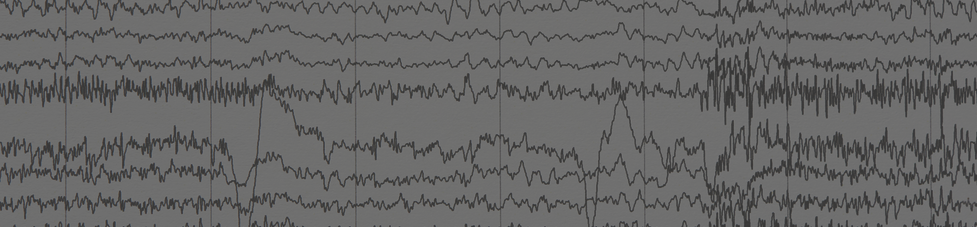
About this study
While working as a research assistant at the University of Florida, I completed a senior thesis in the Brain, Cognition and Development Lab. My role was to clean, process and analyze previously collected neuroimaging and behavioral data. The study itself was designed by a former lab member, who was also responsible for participant testing and data collection.
Broadly, the study focused on understanding the brain processes involved in context-dependent memory and face perception. Context-dependent memory refers to improved memory performance when the environmental context at encoding matches the environmental context at retrieval.
The specific aim was to examine the neural and behavioral correlates of context-dependent memory for own- and other-race faces during an old/new memory task that manipulated music tonality (major key / minor key), in order to determine whether encoding or retrieval of faces is influenced by group familiarity and by encoding/retrieval context.
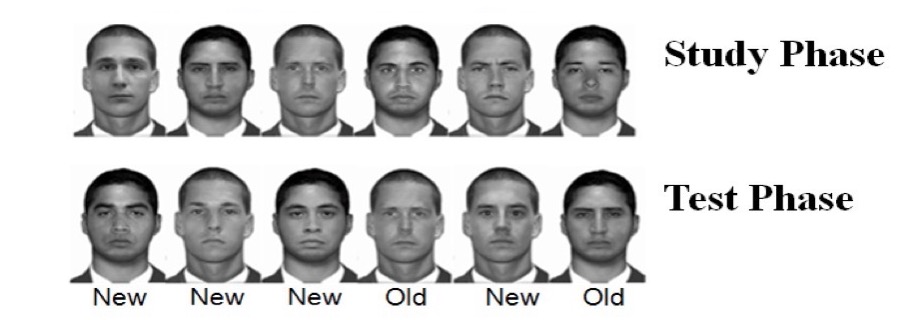
Example stimuli from the old/new face recall task
The experiment consisted of several blocks, each with a study phase followed by a corresponding test phase. During the study phase, participants memorized 16 sequentially presented faces. In the test phase, those 16 faces were shown again, randomly mixed with 16 new faces, and participants judged each as "old" or "new." Throughout, EEG data was collected via a 128-channel EEG cap measuring electrical activity at the scalp.
Data processing
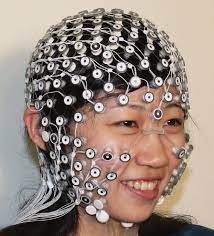
The raw EEG data was processed in Net Station following a seven-step pipeline:
- Applying highpass and lowpass filters
- Segmentation
- Artifact detection
- Bad channel replacement
- Average specification
- Average reference
- Baseline correction
Segmentation (step 2) is central to the analytical approach. Perception and memory are cognitive processes that unfold rapidly after a stimulus appears, so the analysis focuses on neural activity in the brief window immediately following each face. Segmentation creates 900-millisecond windows around each stimulus for close examination.
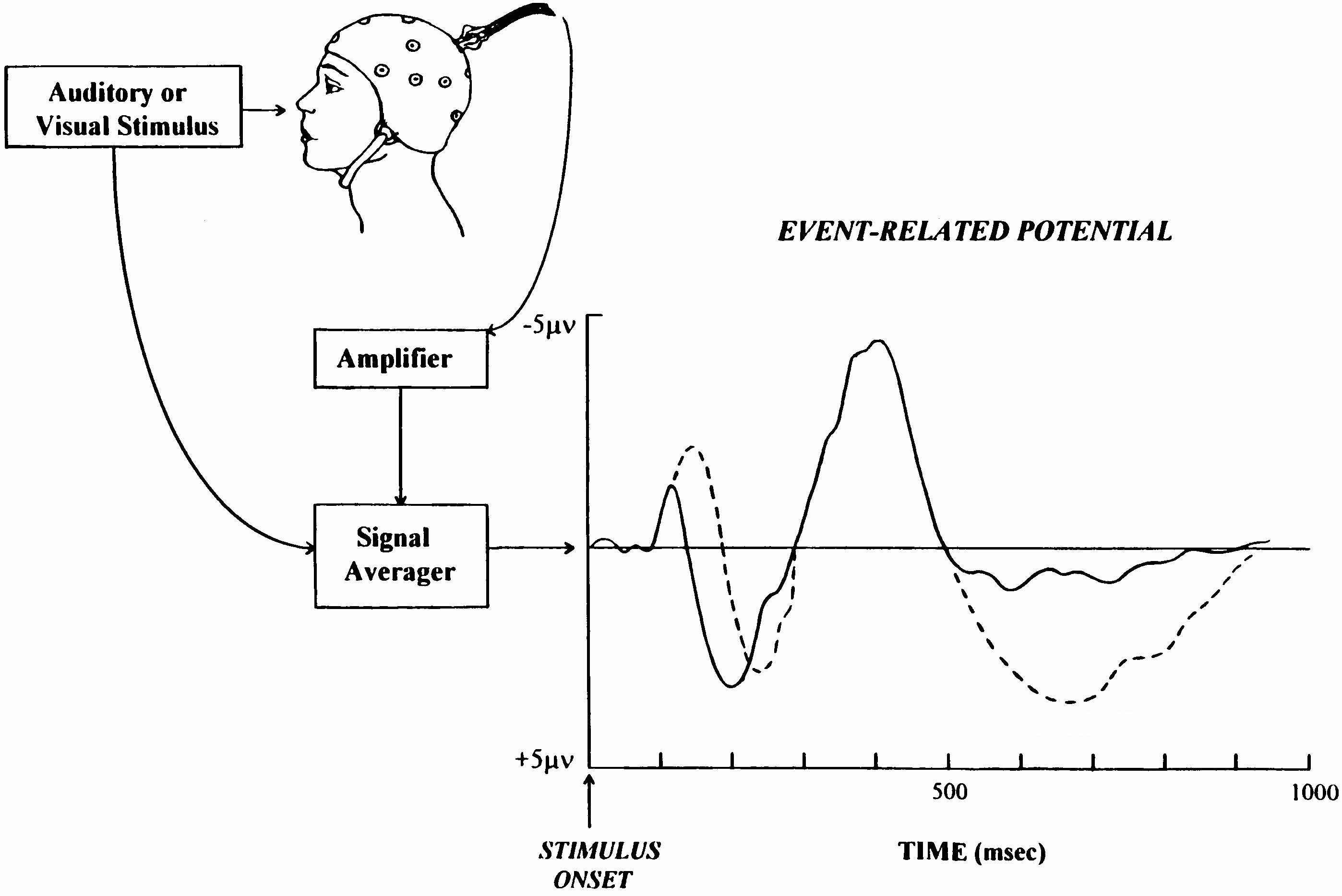
This brain response — a direct result of a stimulus — is called an event-related potential (ERP). The analysis focused on ERP components, typically characterized by spatial location and timing:
Perceptual components
- P100 — general perception; positive peak around 100 ms, occipital regions
- N170 — face-processing perception; negative trough around 170 ms, occipital regions
- N250 — face familiarity; negative trough around 250 ms, occipital regions
Memory components
- P600 — recollection, a slower process providing explicit memory detail; positive peak around 600 ms, left/right posterior superior regions
- FN400 — familiarity, a fast process without explicit detail; negative trough around 400 ms, left/right anterior superior regions
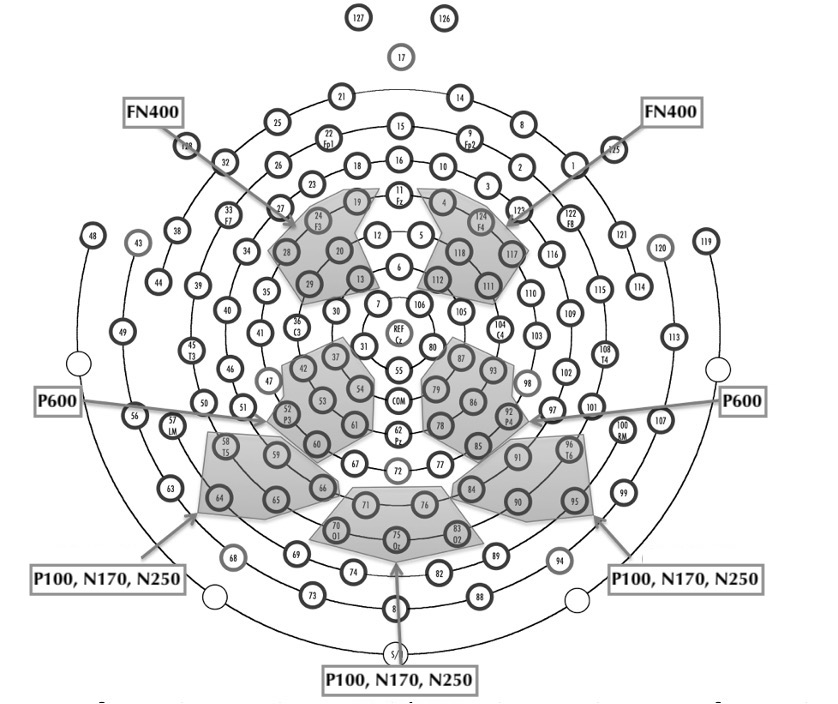
Electrode regions associated with each ERP component (top = anterior, bottom = posterior)
Behavioral data was collected alongside the EEG recordings via participants' old/new judgments. Performance measures — Hit Rate, Miss Rate, False Alarm Rate, Correct Rejection Rate, AUC ROC and D-prime — were calculated from these responses. That processing was done in R; the script is on GitHub.
Data analysis
After preprocessing and segmentation into ERPs, the neuroimaging data was analyzed in SPSS. For each ERP component, a multivariate analysis of variance (MANOVA) tested the effect of music context, race of face presented, participant judgment and brain region on mean ERP amplitude. The findings most relevant to context-dependent memory:
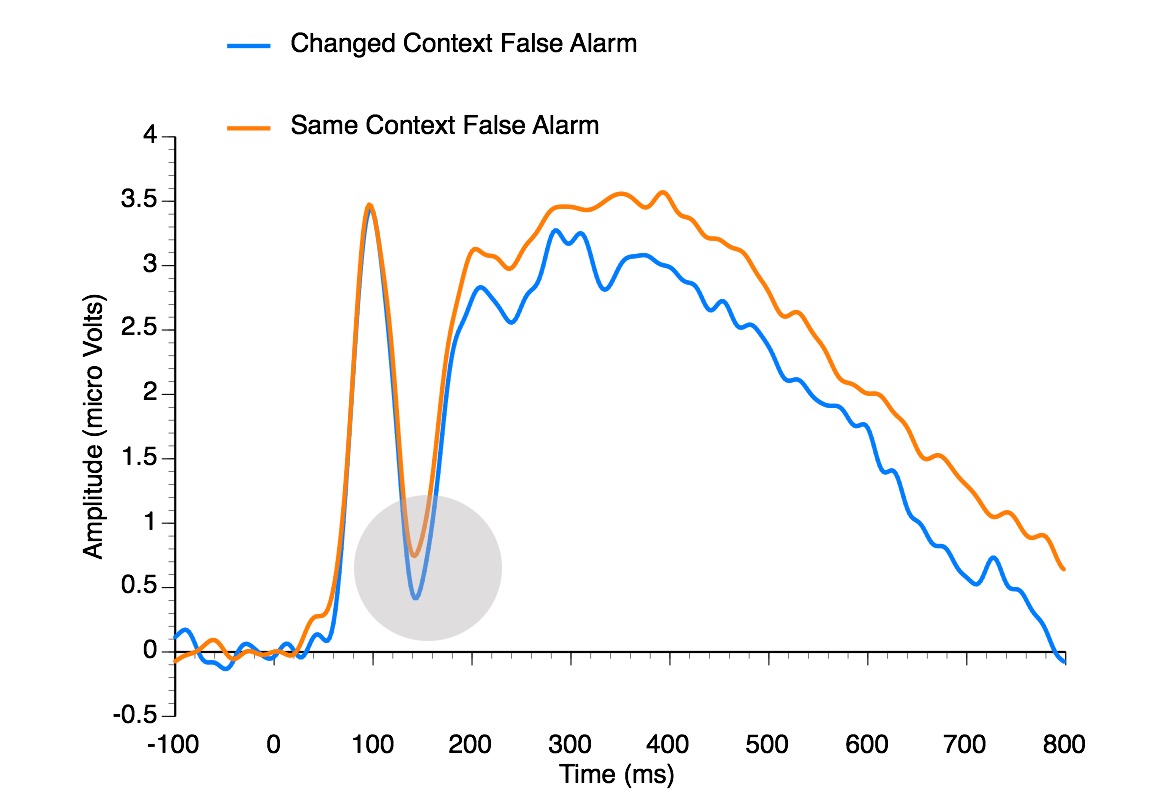
N170: changed-context trials showed a greater mean amplitude than same-context trials on false alarms (p = 0.040)
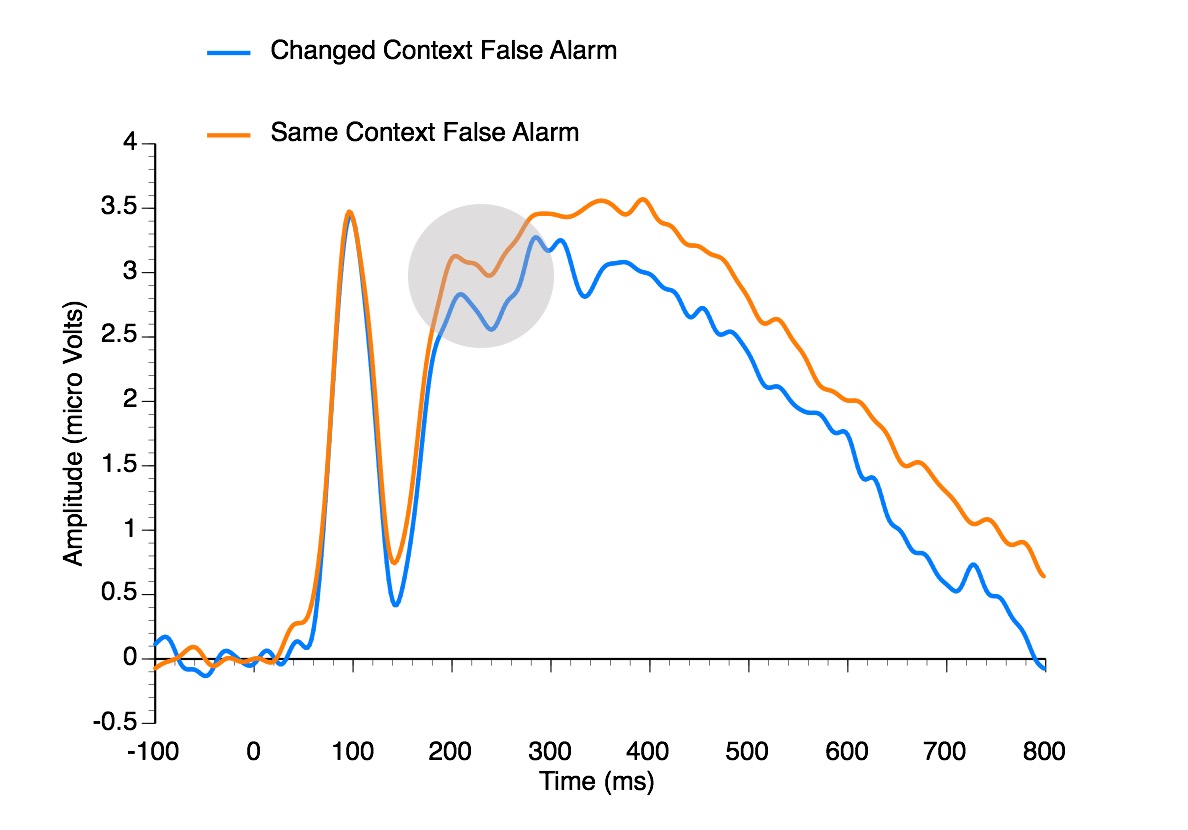
N250: the same changed- vs. same-context pattern held for false alarms (p = 0.011)
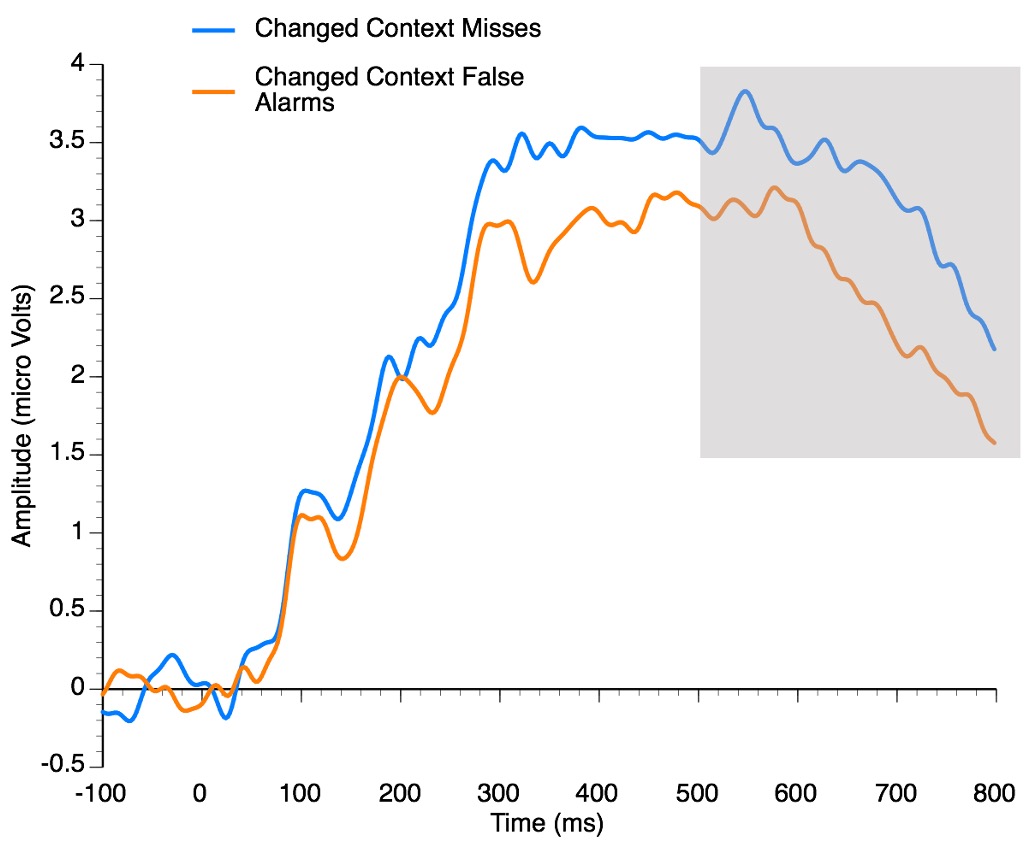
P600: misses yielded a greater amplitude than false alarms under changed-context conditions (p = 0.005)
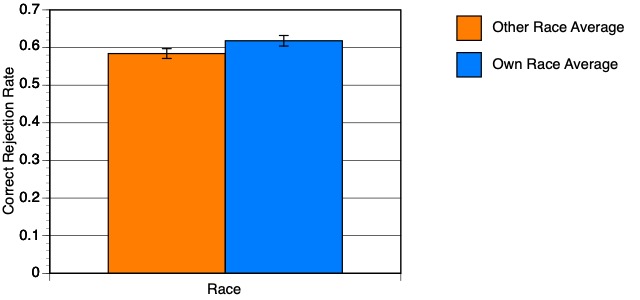
A parallel MANOVA on the behavioral data tested music context and race of face against each performance measure. No significant relationship emerged between music context and performance. Race, however, had a significant main effect on correct rejection rate (p = 0.030): own-race faces (M = 0.618, SE = 0.014) were correctly rejected more often than other-race faces (M = 0.584, SE = 0.013).
Interpretation
This study investigated how context-dependent memory shapes cognitive processes related to memory and perception. Combining neuroimaging and behavioral data revealed significant interactions involving context, race and task judgment across multiple ERP components. These findings support the hypothesis that environmental context plays a role in perception and memory during face processing. Further research should examine how brain processes responsible for decision-making integrate contextual information.