
Background & purpose
As a Healthcare Data Analyst at Brooks Rehabilitation Center for Data Solutions, I led development of a readmission risk tool — built in SAS Enterprise Guide and SAS Visual Analytics — to help identify patients at highest risk of readmitting to acute care from our inpatient rehabilitation facility.
Established readmission risk tools exist for acute care hospitals, but they don't translate well to inpatient rehabilitation. Clinical teams at Brooks Rehabilitation found that traditional models tended to flag the majority of patients as "high-risk," failing to provide actionable insight into patients' varying risk levels. This project addresses that gap: the tool calculates a risk score and assigns a corresponding risk group for each patient, which clinical teams use to guide multidisciplinary care for the highest-risk patients.
Methods
We used logistic regression to model acute care readmissions, chosen for the binary response variable (readmitted: yes or no).
The first step was compiling candidate data elements. The data solutions team worked closely with clinicians to identify factors likely to predict readmission — demographics, diagnoses, medical conditions, medication administrations, functional assessment scores ("Caretool" scores), vitals and labs.
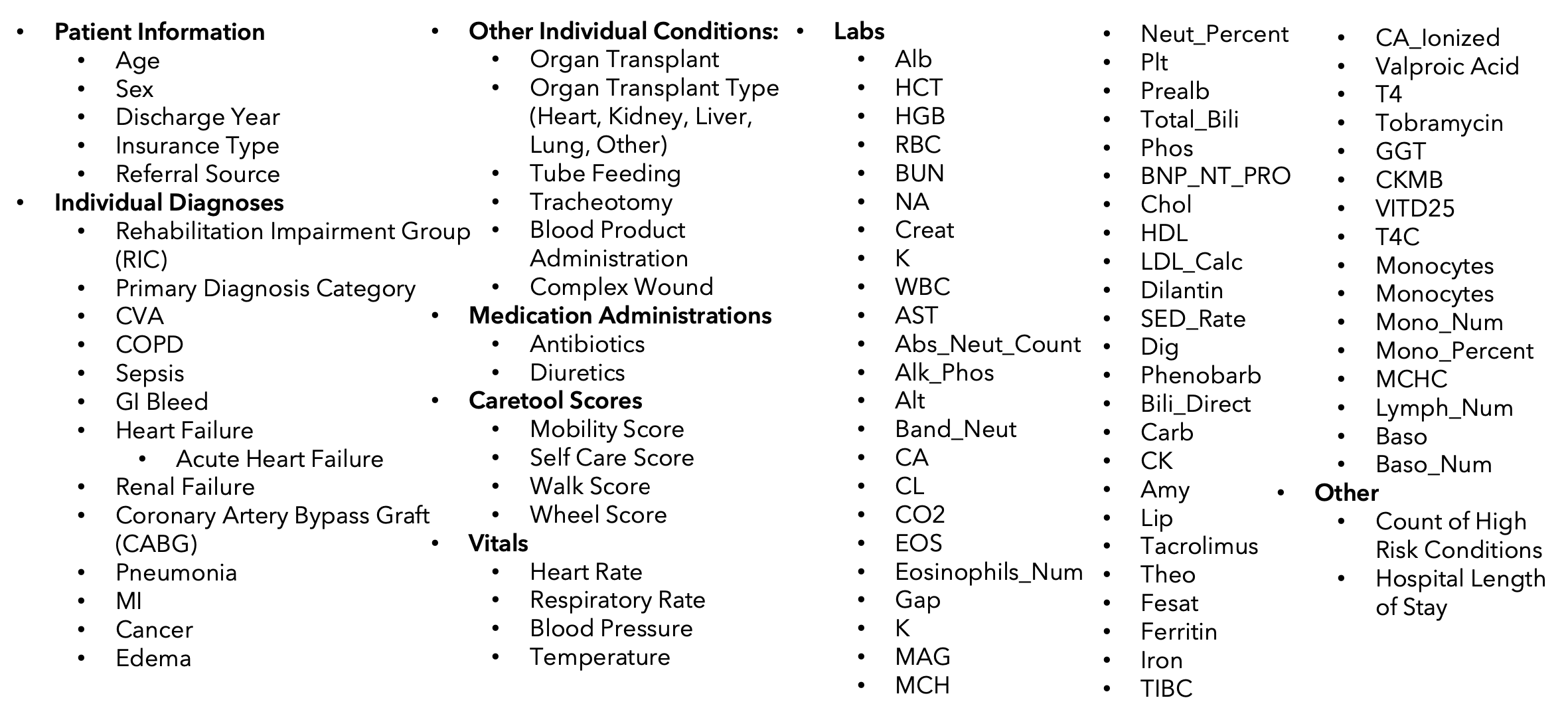
Preliminary analysis examined each element's relationship with readmission. Variables with low correlation or low sample size were excluded, and highly correlated variables were removed to address multicollinearity. Data was filtered to January 2018–March 2022 due to limited lab data before 2018.
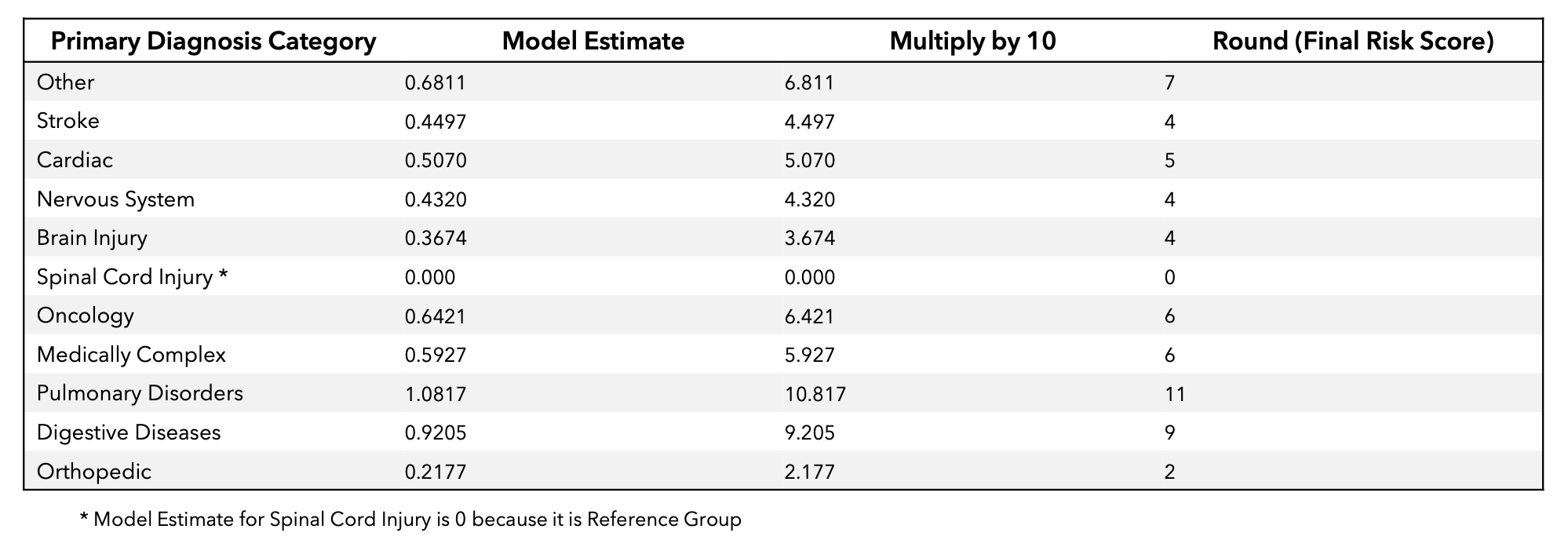
A backwards-selection logistic regression then identified the final set of variables. The resulting model coefficients were used to build the risk scoring system: each risk factor's score was calculated by multiplying its variable estimate by 10 and rounding to the nearest whole number, based on prior published approaches to readmission risk scores.1,2
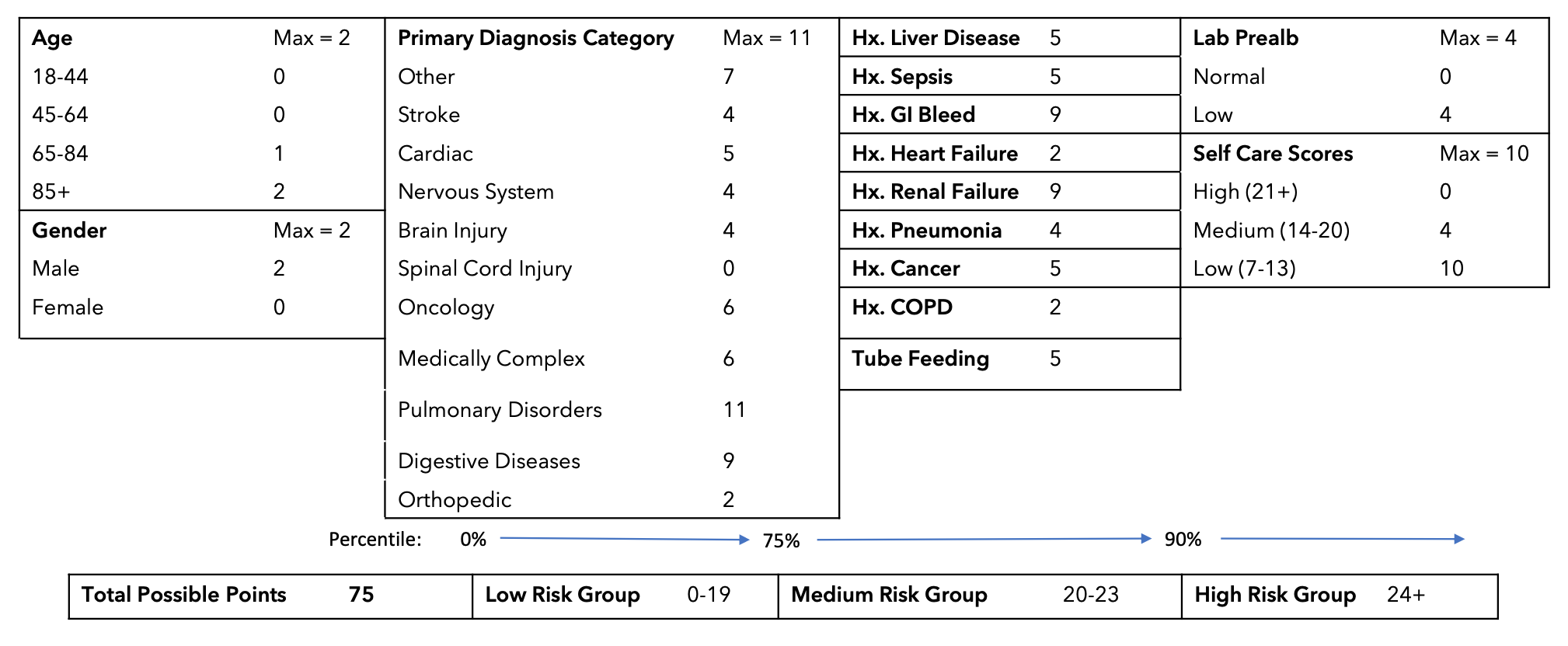
Individual risk factor scores were summed into an overall risk score per patient, and patients were assigned to a risk group by score percentile: Low (0–75th percentile), Medium (75th–90th) and High (90th–100th).
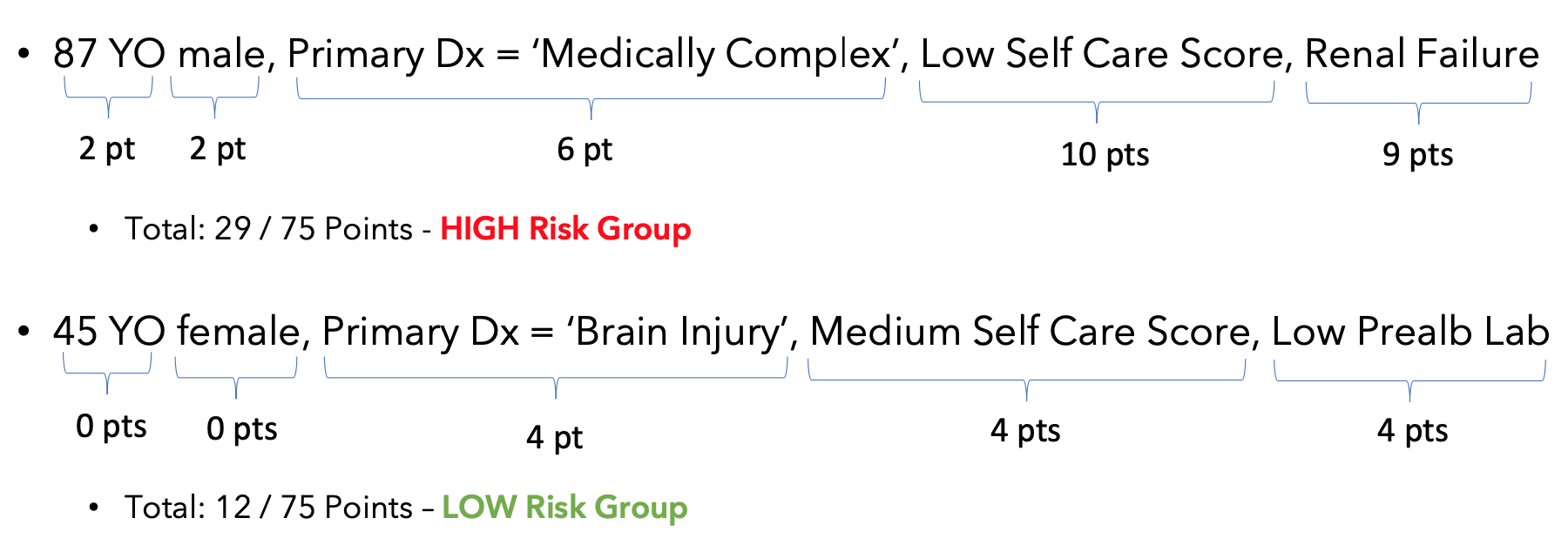
Two example patients illustrating risk score calculation and group assignment
Results
Predictive factors. The factors most predictive of readmission (largest regression estimates) were:
- Renal failure comorbidity
- Low score on self-care function (Caretool assessment)
- Gastrointestinal bleeding comorbidity
- Pulmonary disorder primary diagnosis
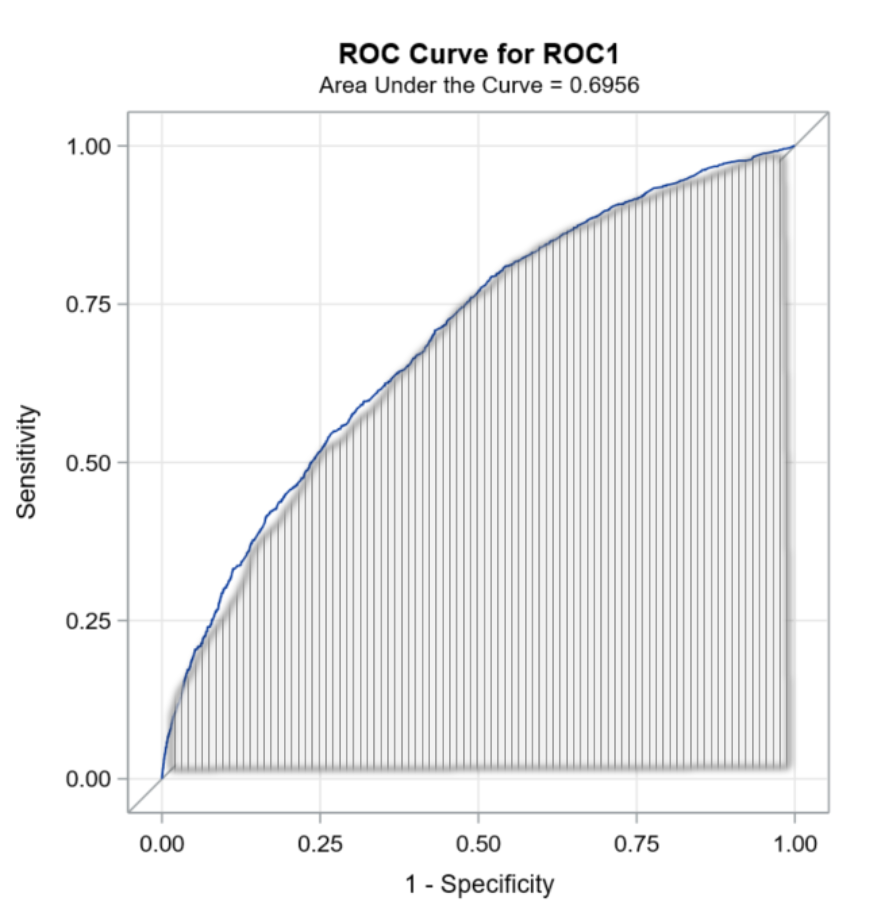
Area under the ROC curve. To evaluate the model, we examined the AUC for the final logistic regression.
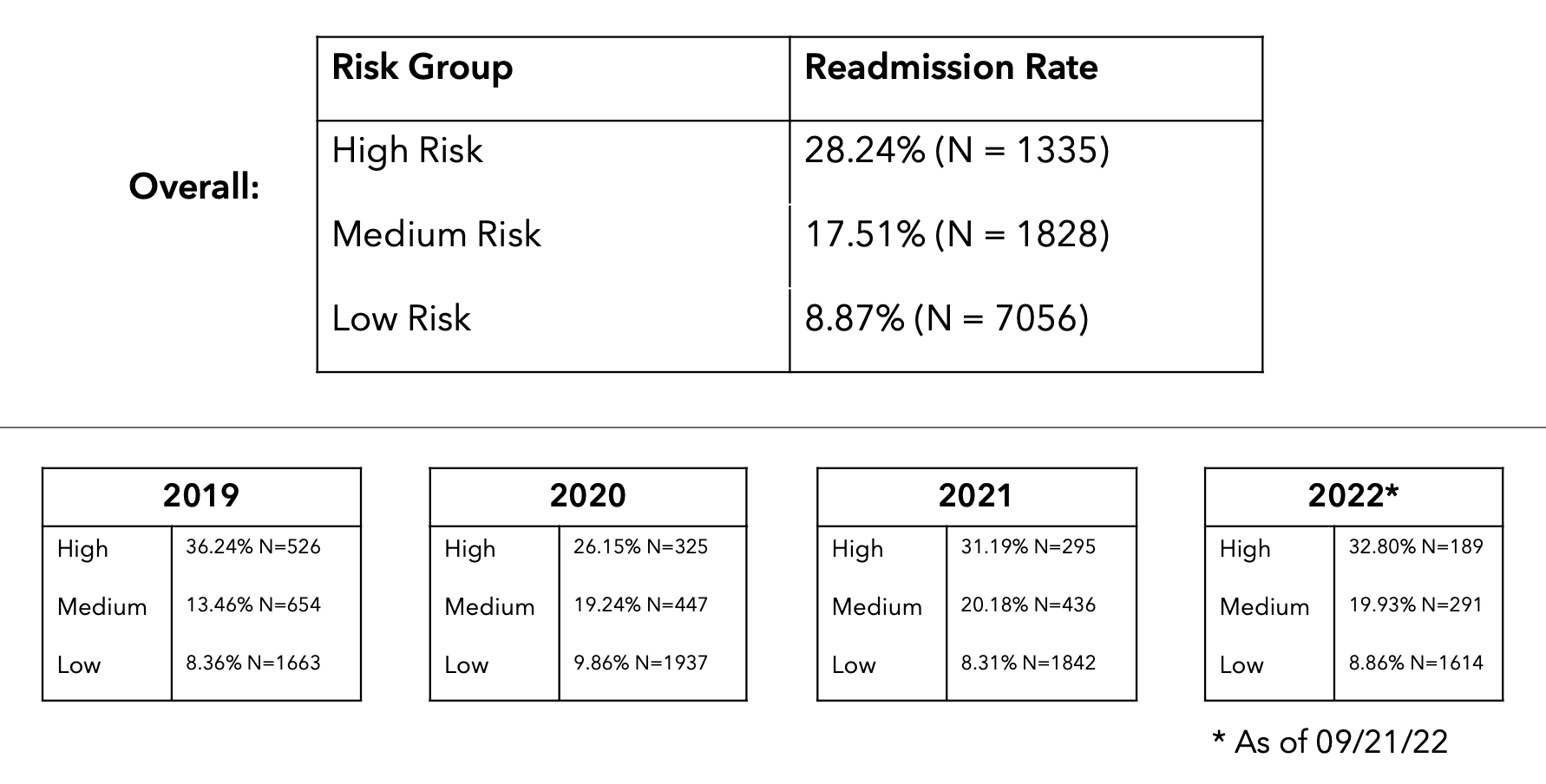
Readmission rates. Readmission rates were calculated for past patients by risk group, both overall and broken down by year.
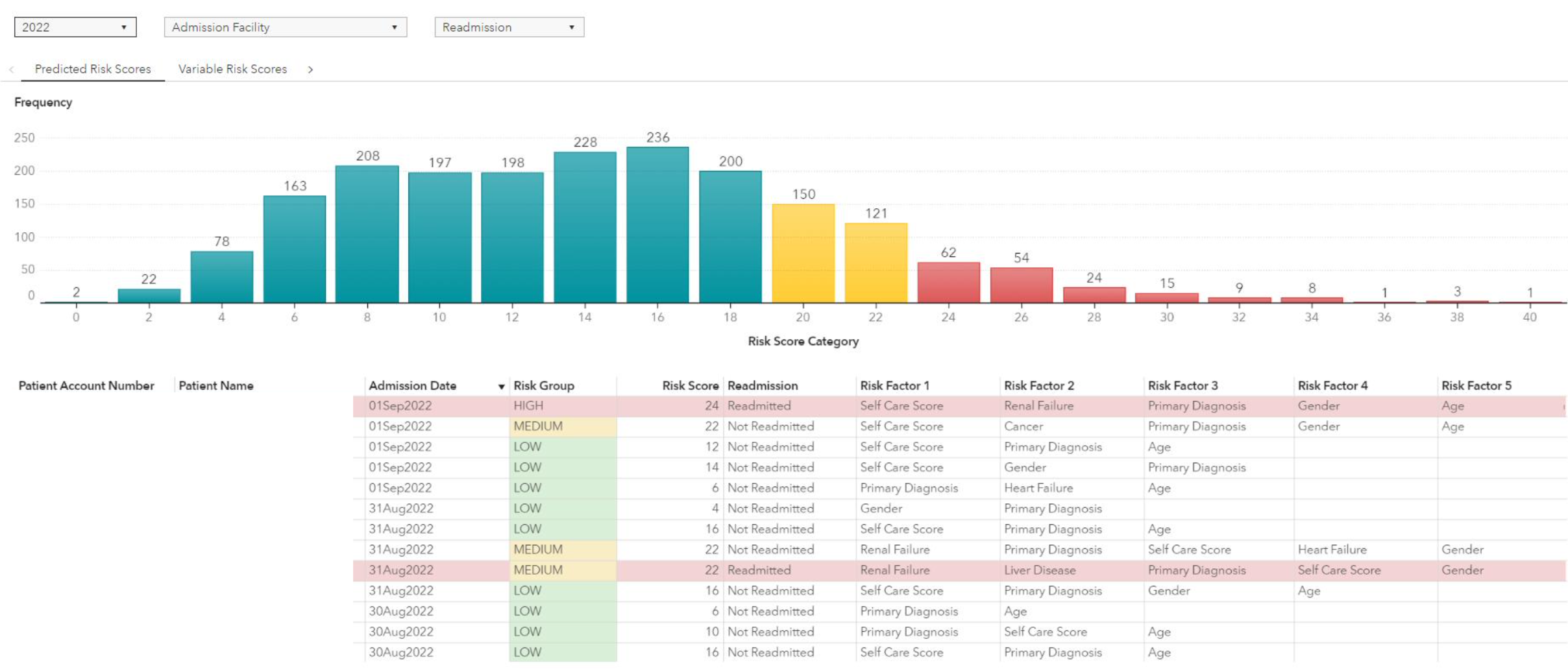
Visual analytics dashboard. The tool was implemented in a SAS Visual Analytics dashboard showing the overall distribution of patient risk groups alongside patient-level detail on the factors contributing most to each score.
Discussion
This tool is used by clinical teams to support care decisions and reduce readmissions. Beyond its predictive, clinical utility, it also serves a descriptive role — surfacing features in patients' clinical profiles associated with hospital readmission. Overall, it helps drive clinical processes that account for each patient's individual readmission risk profile and care needs.
References
- Chen SY, Stem M, Cerullo M, et al. Predicting the Risk of Readmission From Dehydration After Ileostomy Formation: The Dehydration Readmission After Ileostomy Prediction Score. Dis Colon Rectum. 2018;61(12):1410-1417. doi:10.1097/DCR.0000000000001217
- Boteon APCS, Boteon YL, Hodson J, et al. Multivariable analysis of predictors of unplanned hospital readmission after pancreaticoduodenectomy: development of a validated risk score. HPB (Oxford). 2019;21(1):26-33. doi:10.1016/j.hpb.2018.06.1802
- Su MC, Chen YC, Huang MS, et al. LACE Score-Based Risk Management Tool for Long-Term Home Care Patients: A Proof-of-Concept Study in Taiwan. Int J Environ Res Public Health. 2021;18(3):1135. doi:10.3390/ijerph18031135
- Miller WD, Nguyen K, Vangala S, Dowling E. Clinicians can independently predict 30-day hospital readmissions as well as the LACE index. BMC Health Serv Res. 2018;18(1):32. doi:10.1186/s12913-018-2833-3
- Hwang AB, Schuepfer G, Pietrini M, Boes S. External validation of EPIC's Risk of Unplanned Readmission model, the LACE+ index and SQLape as predictors of unplanned hospital readmissions. PLoS One. 2021;16(11):e0258338. doi:10.1371/journal.pone.0258338
- Damery S, Combes G. Evaluating the predictive strength of the LACE index in identifying patients at high risk of hospital readmission following an inpatient episode. BMJ Open. 2017;7(7):e016921. doi:10.1136/bmjopen-2017-016921
- Fry CH, Heppleston E, Fluck D, Han TS. Derivation of age-adjusted LACE index thresholds in the prediction of mortality and frequent hospital readmissions in adults. Intern Emerg Med. 2020;15(7):1319-1325. doi:10.1007/s11739-020-02448-3